Perfect Bonding: Why Proper Gel Application is Critical for Rain Sensors
Modern vehicles are marvels of technology, packed with features designed to make driving safer and more comfortable. One feature many drivers take for granted is the automatic rain-sensing wiper system. However, after a windshield replacement Toronto residents often report that their wipers have stopped detecting rain accurately, or fail to activate altogether. The culprit? It is rarely the sensor itself, but rather a small, transparent component: the silicone gel pad.
At AlexWindshield, we believe that understanding the finer details of auto glass helps you make better decisions for your vehicle. Here is why the proper application of sensor gel is the difference between a functional safety system and a frustrating malfunction.
How Rain Sensors Actually Work
Contrary to popular belief, rain sensors do not "feel" water on the outside of the glass. Instead, they operate based on the principle of total internal reflection. An infrared light is beamed from inside the sensor through the glass. When the glass is dry, most of this light reflects back to a detector. When water droplets hit the windshield, they scatter the light, disrupting the reflection. The sensor calculates how much light is lost and triggers the wipers accordingly.
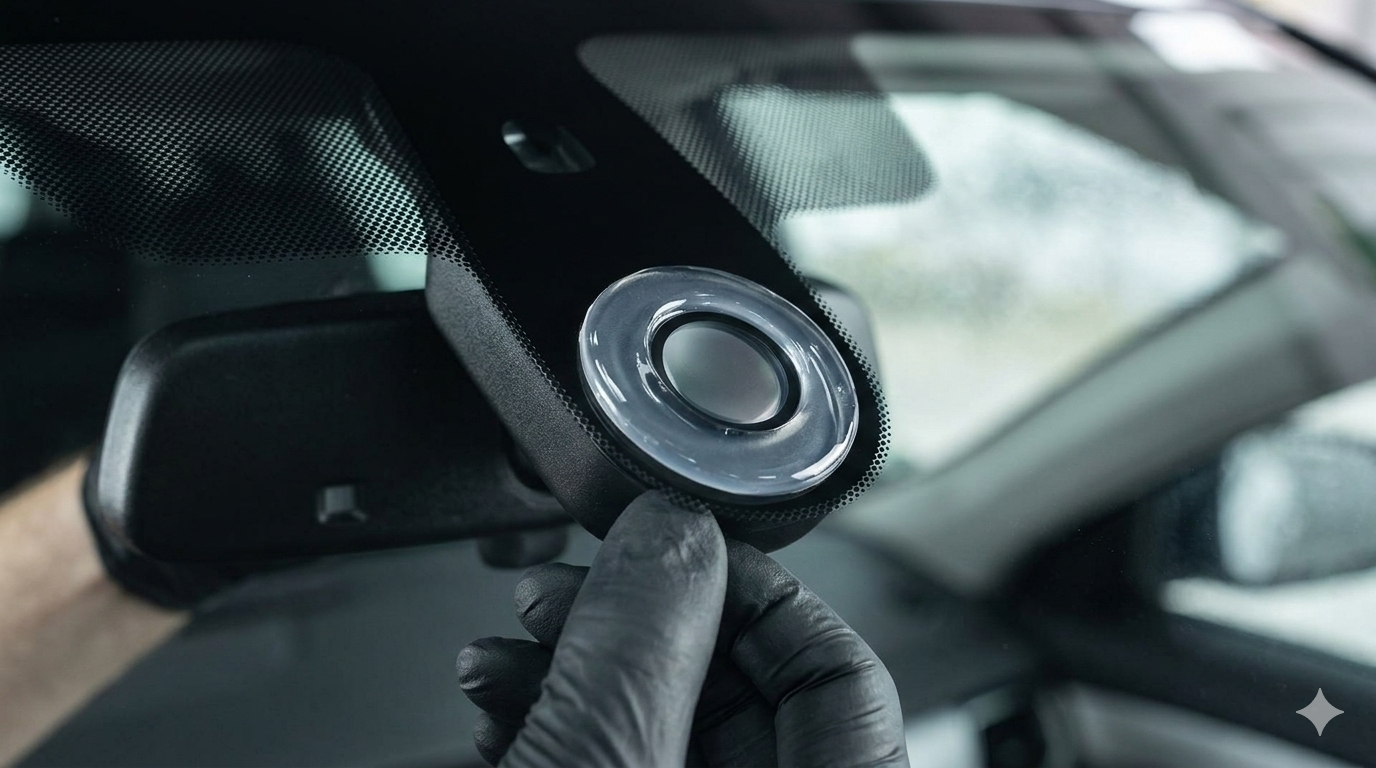
This process requires an unbroken optical path between the sensor and the glass. This is where the gel pad (or bonding gel) comes into play. It acts as a coupling medium, filling the microscopic gap between the sensor hardware and the windshield glass.
The Critical Role of the Gel Pad
Think of the gel pad as a bridge. If the bridge has holes, cracks, or gaps, the signal cannot cross effectively. For the sensor to work, the gel must create a perfect vacuum seal free of air bubbles or dust. This ensures that the infrared light travels through the glass without distortion.
During a standard auto glass repair or replacement, inexperienced technicians often make critical mistakes regarding this gel:
- Reusing Old Pads: Gel pads are generally designed for single use. Trying to peel an old pad off a broken windshield and stick it onto a new one creates deformities and air pockets.
- Dust Contamination: Even a speck of dust trapped in the gel can cause the sensor to misread light refraction, causing wipers to activate on a sunny day.
- Using Generic Gels: Not all gels have the same refractive index. Using a cheap substitute can confuse the sensor's software.
Safety Sensors and ADAS Connection
In modern vehicles, the rain sensor is often housed in the same bracket as other critical safety sensors, such as Lane Departure Warning cameras and collision avoidance systems. When the windshield is replaced, the alignment of these components is paramount.
If a technician cuts corners on the rain sensor gel, it is a red flag that they may not be following strict OEM procedures for the rest of the installation. This is why ADAS calibration (Advanced Driver Assistance Systems) is often required alongside the physical glass replacement. At AlexWindshield, we ensure that both the physical bonding of the sensors and the software calibration are executed to factory standards.
The AlexWindshield Difference
As a leading expert in the GTA, AlexWindshield refuses to compromise on "invisible" parts like sensor gels. Our protocol for windshield replacement includes:
- OEM Specification Replacement: We replace the gel pad with a brand-new, chemically compatible unit for every installation.
- Bubble-Free Application: We use precision tools to ensure a perfect vacuum seal between the sensor and the glass.
- Comprehensive Testing: We test the sensor functionality before handing the keys back to you.
Whether you visit our shop or utilize our convenient mobile service across Toronto, you receive the same level of meticulous care. Don't let a small bubble in a gel pad compromise your visibility during a storm.
Need a windshield replacement that respects your car's technology? Contact AlexWindshield today for expert service in the GTA.


